
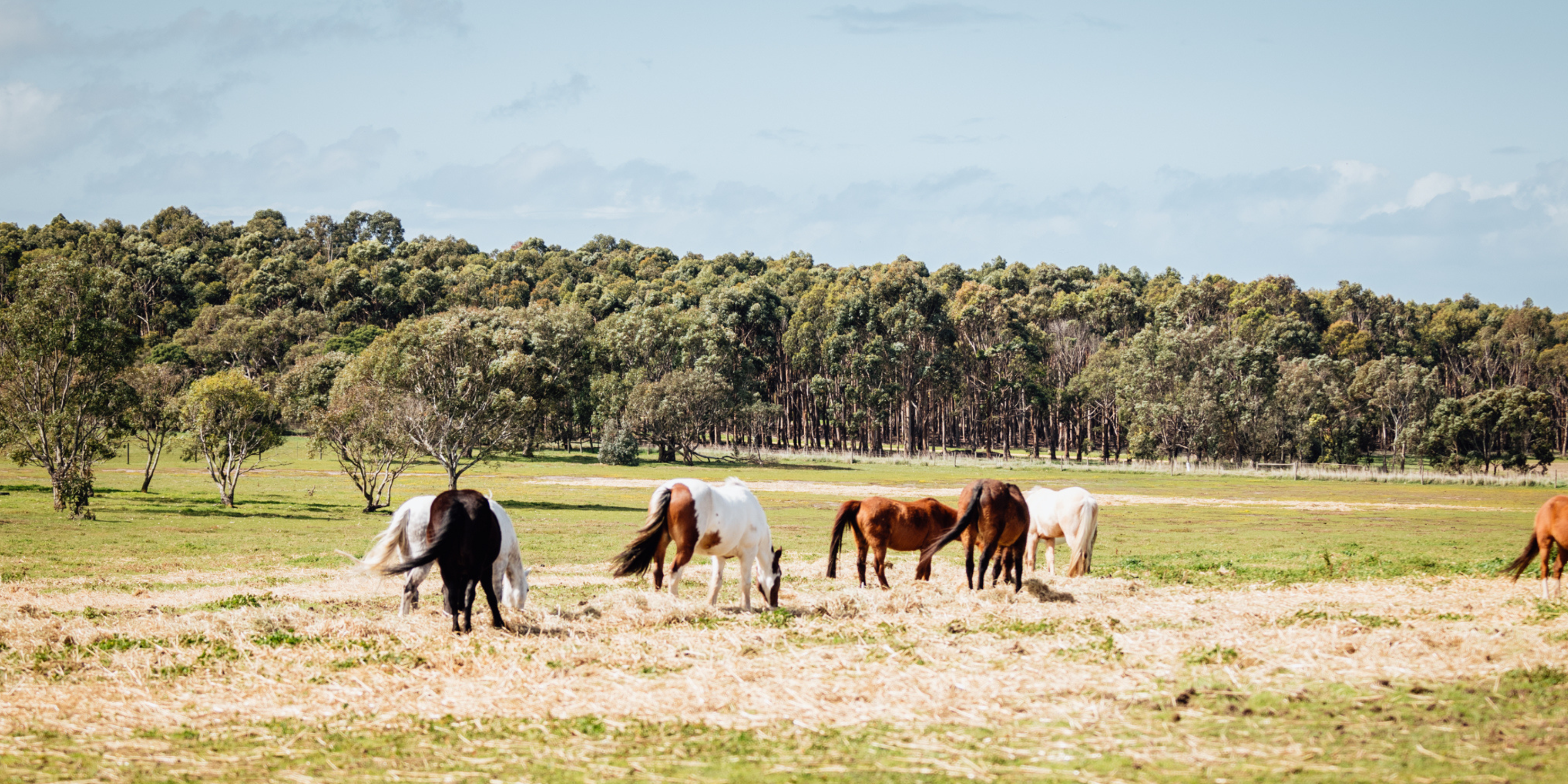

People are often attracted to horses, possessing qualities of beauty, strength and majesticness. Being in the presence of horses can evoke feelings and responses that may not otherwise arrive for the participant, supporting availability of the sensations within session to be therapeutically attended to and processed. Their size, power, and ability to move quickly can naturally heighten people’s awareness around horses, eliciting a need to be attentive to what is happening inside themselves and their environments. This heightened awareness is the foundation for self-awareness development, and is the catalyst for change processes as we begin to discover our common ways for thinking, feeling, behaving, and relating.
Being prey animals, horses are inherently oriented to their environment. To keep themselves safe from predators, horses have become highly sensitive to the intent of other living beings. This allows horses to sense into the internal experience of others. This means horses will respond behaviourally different to people depending on what the person is feeling. This ability offers rich opportunity for people to receive direct, immediate biofeedback into their internal world, supporting an array of self-awareness into non-verbal communication, nervous system activation or regulation, thoughts, feelings, and behaviours.
Horses are also herd animals and live in constant connection and relationship. As social animals, horses can foster a safe-relational container for people to experience trust, emotional regard, and acceptance in relationship, experiences often different from human-to-human relationships, to support corrective emotional experiences and relational skill development. Horses relate authentically, honouring how they feel, and expressing feelings in the moment through their body language. This offers unique opportunity for people to explore their experience in human relationships, as they step into live relationship with horses and reflect on the horse’s non-judgmental feedback provided.


